😬 Introduction: You’re Not Alone in Feeling the Sting
If you’ve ever walked out of the dentist’s office with a bill that made your jaw drop, you’re not alone. Millions of Americans wonder why something as basic as keeping your teeth healthy costs as much as a monthly mortgage payment. A crown can easily run $1,200. An implant? $5,000 or more. Even a routine cleaning feels pricey when insurance doesn’t fully cover it.
At Curated Dental, we believe consumers deserve transparency. Dentistry shouldn’t feel like a financial mystery. In this guide, we’ll pull back the curtain on why dental care costs so much in the USA—and, more importantly, what you can do to protect your smile and your wallet.
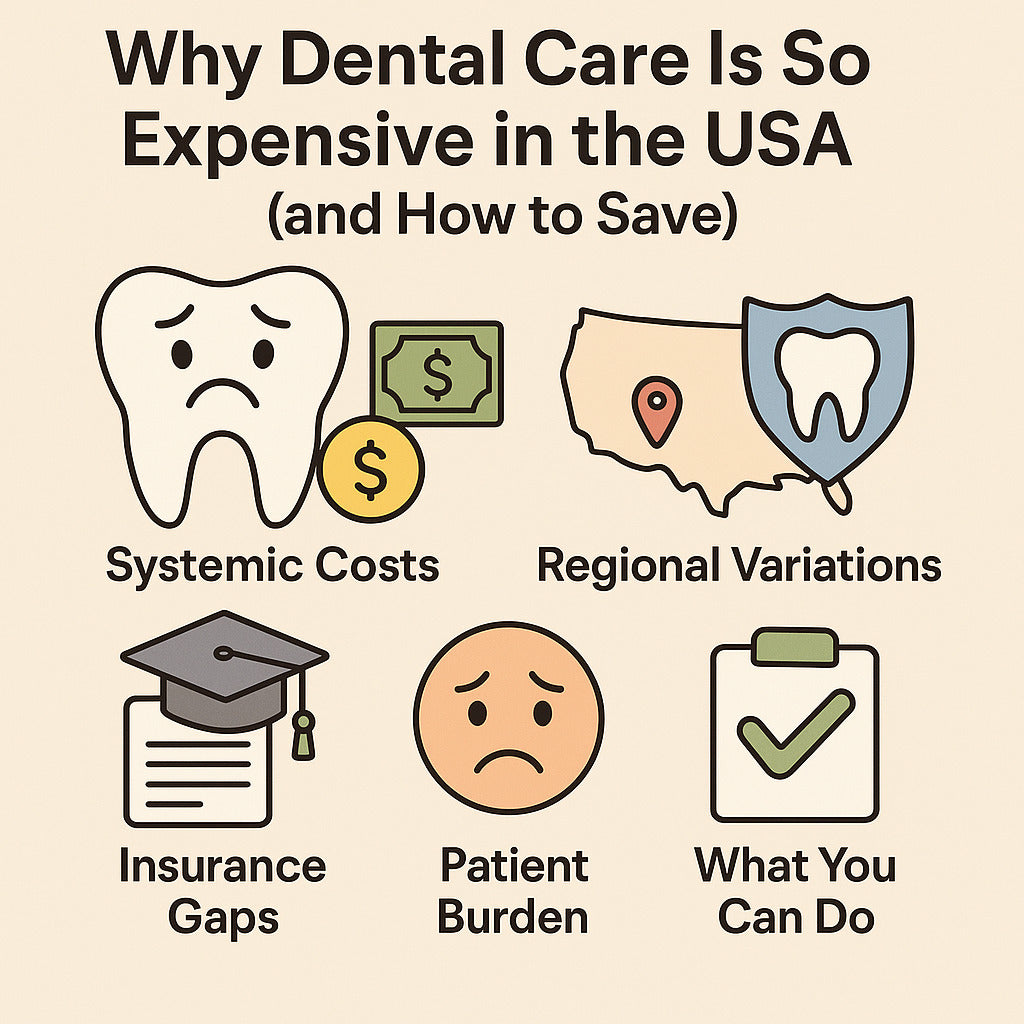
💸 Systemic Costs: The Hidden Price Tag of Running a Dental Office
🎓 1. Dental School Debt
Most dentists graduate with $250,000–$400,000 in student loans. Unlike physicians who can often work in hospitals with employer loan repayment programs, dentists typically start private practices on their own. Those loans—and the years of education—get factored into the cost of treatment.
🏢 2. Practice Overhead
Running a dental practice is shockingly expensive:
-
🪑 Rent or mortgage on office space
-
🦷 Cutting-edge equipment (chairs, X-rays, sterilizers)
-
👩⚕️ Staff salaries & benefits
-
🧤 Supplies like gloves, masks, and filling materials
On average, overhead eats up 60–70% of every dollar a dental office brings in.
📑 3. Insurance Bureaucracy
Offices spend time and money chasing down reimbursement, and patients get stuck with large balances.
📍 Regional Variations: Why a Filling Costs More in California than in Texas
Ever notice that a crown in Los Angeles might cost $1,500, but in Houston it’s closer to $900? Geography plays a huge role.
-
🏠 Cost of living: Higher rent and salaries = higher dental fees.
-
⚖️ Competition: Fewer dentists in rural areas = less price pressure.
-
💻 Technology adoption: Big-city practices may invest more in expensive same-day tech.
🛡️ Insurance Gaps: The Illusion of Coverage
Dental insurance looks like health insurance—but it works completely differently.
-
📉 Annual maximums: $1,000–$1,500 per year (barely one crown).
-
🪥 Preventive coverage: Cleanings/exams are covered, crowns often only 50%.
-
🚫 Exclusions: Cosmetic treatments? Almost never covered.
No wonder so many patients feel unprotected when real treatment is needed.
😟 Patient Burden: Out-of-Pocket Costs Add Up
-
👵 Aging population: More implants, bridges, and complex care.
-
🌵 Access gaps: Rural areas often lack affordable dental care.
-
💳 Out-of-pocket strain: Delaying care = bigger bills later.
✅ What You Can Do: Smart Strategies to Save
🪥 1. Prevention is Your Superpower
Daily habits matter! The right toothpaste, rinses, flossing, and diet choices can save thousands later.
👉 Explore our Curated Dental Collection for science-backed products.
👨⚕️ 2. Get a Second Opinion
Always wise before committing to a big treatment plan.
📅 3. Understand Your Insurance
Time major treatments across calendar years to double benefits.
📊 4. Use Tools to Track Your Care
Stay on top of your history and costs with our Curated Dental Oral Care Tracker.
👉 Try it free here.
🏫 5. Explore Financing & Alternatives
Dental schools, community clinics, and discount plans can lower costs (safely).
🦷 Final Thoughts: Transparency is Power
Dental care in the USA is expensive because of systemic issues—debt, overhead, and insurance gaps—but knowledge is power.
At Curated Dental, our mission is simple: cut through the confusion, give you honest answers, and connect you with products and tools that make oral care easier and more affordable.
👉 Start today with our product collection or sign up for the free Oral Care Tracker to take charge of your smile.



Leave a comment
All comments are moderated before being published.
This site is protected by hCaptcha and the hCaptcha Privacy Policy and Terms of Service apply.